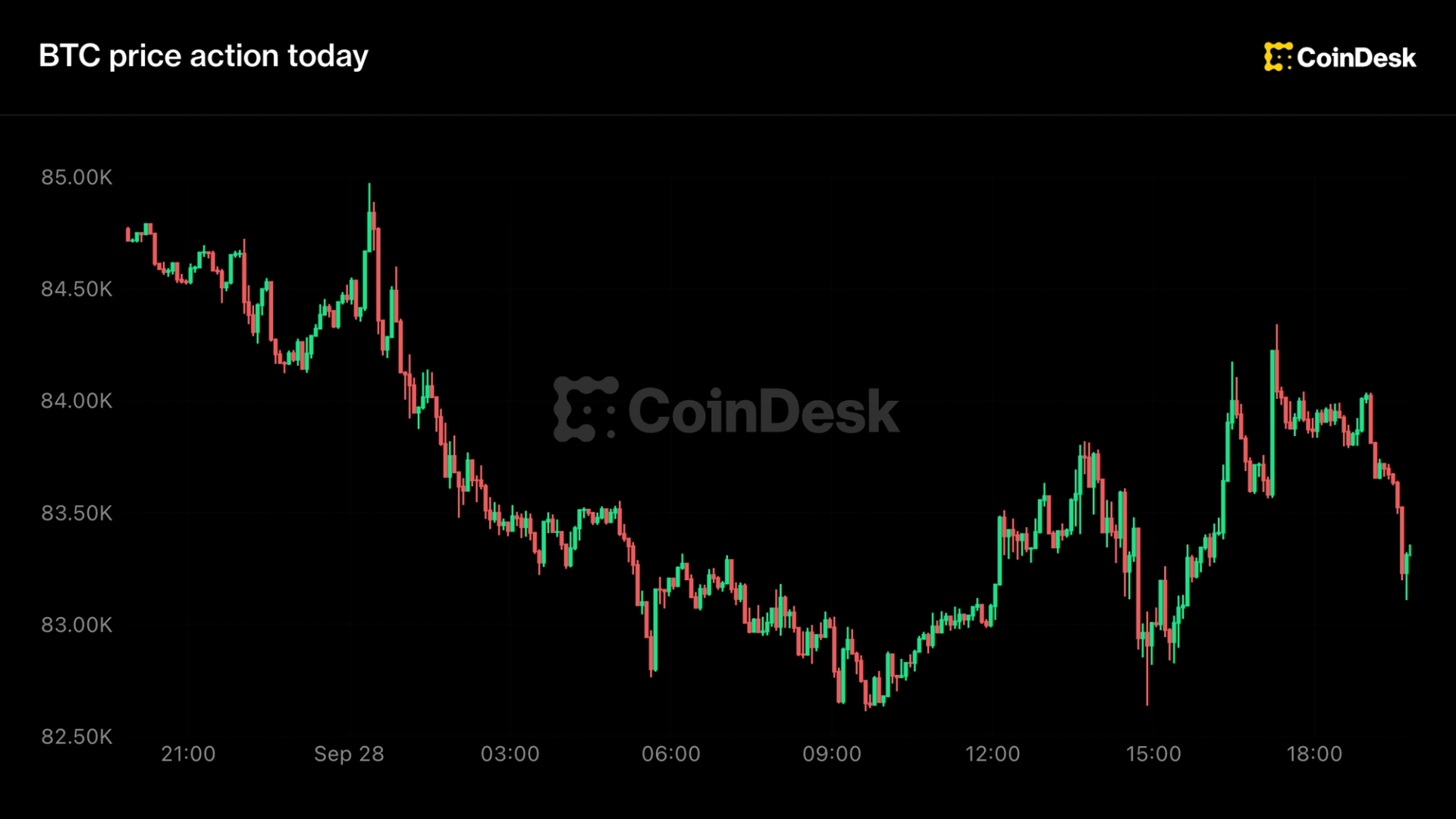
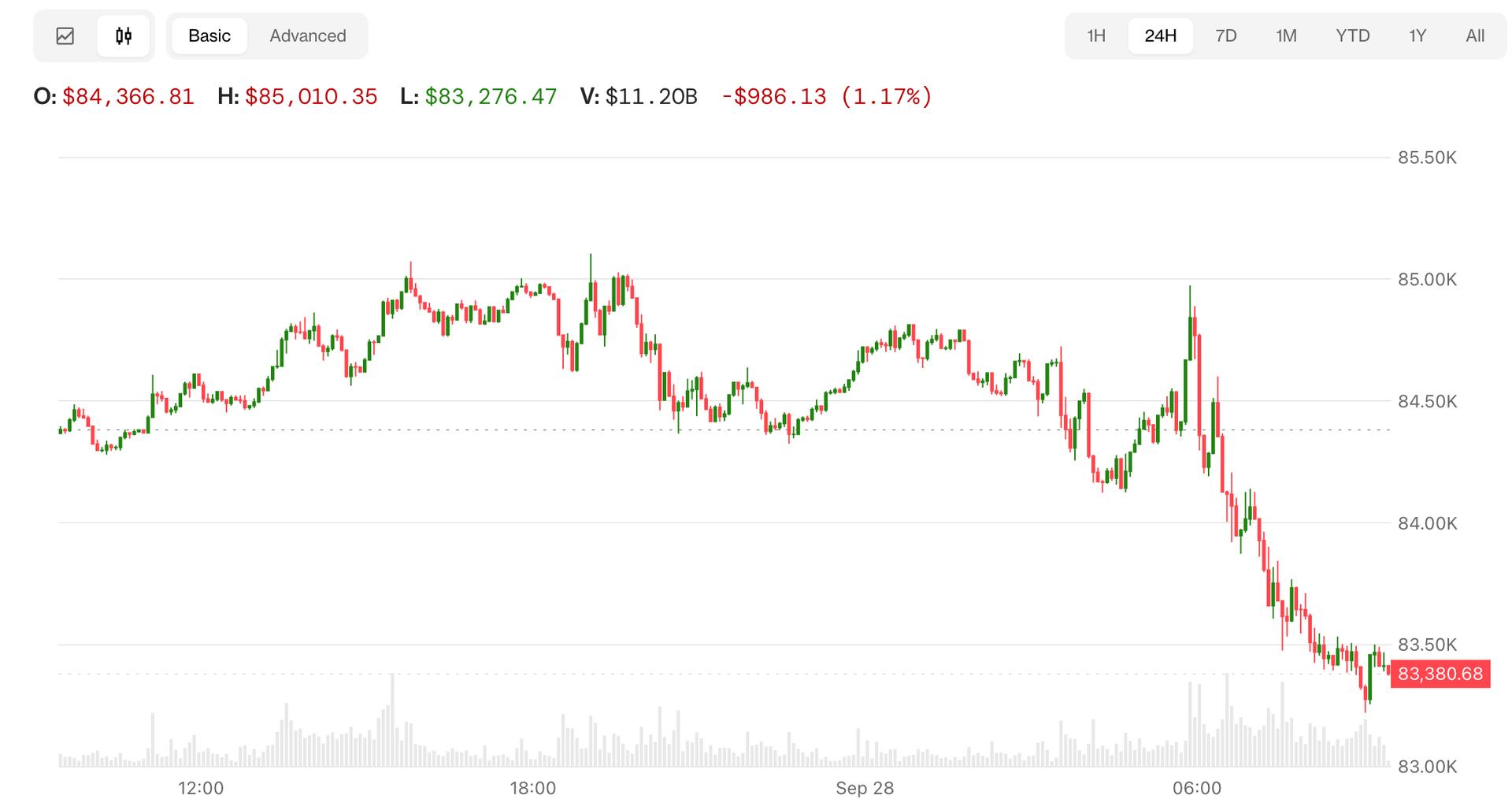
Bitcoin fell below $83,000 to start the week amid US-Iran war developments but remains up more than 40% for Q3 ahead of key inflation and jobs data.
CoinDesk found 27 successful swaps moving about 2,390 ETH into 75.2 BTC, even as Bitget urged THORChain to stop serving addresses tied to the $387.5 million theft.
Strategy's total holdings account for around 4% of the 21 million bitcoin supply cap — worth roughly $70 billion.
Your day-ahead look for Sept. 28, 2026
Ether withdrawals are scheduled to return Tuesday and USDt on Wednesday as Bitget restores services following last week’s $388 million hack.
Franklin Templeton’s tokenized money market shares can be used as collateral for USDT or USDC trading credit lines on Bybit while earning yield on the underlying assets.
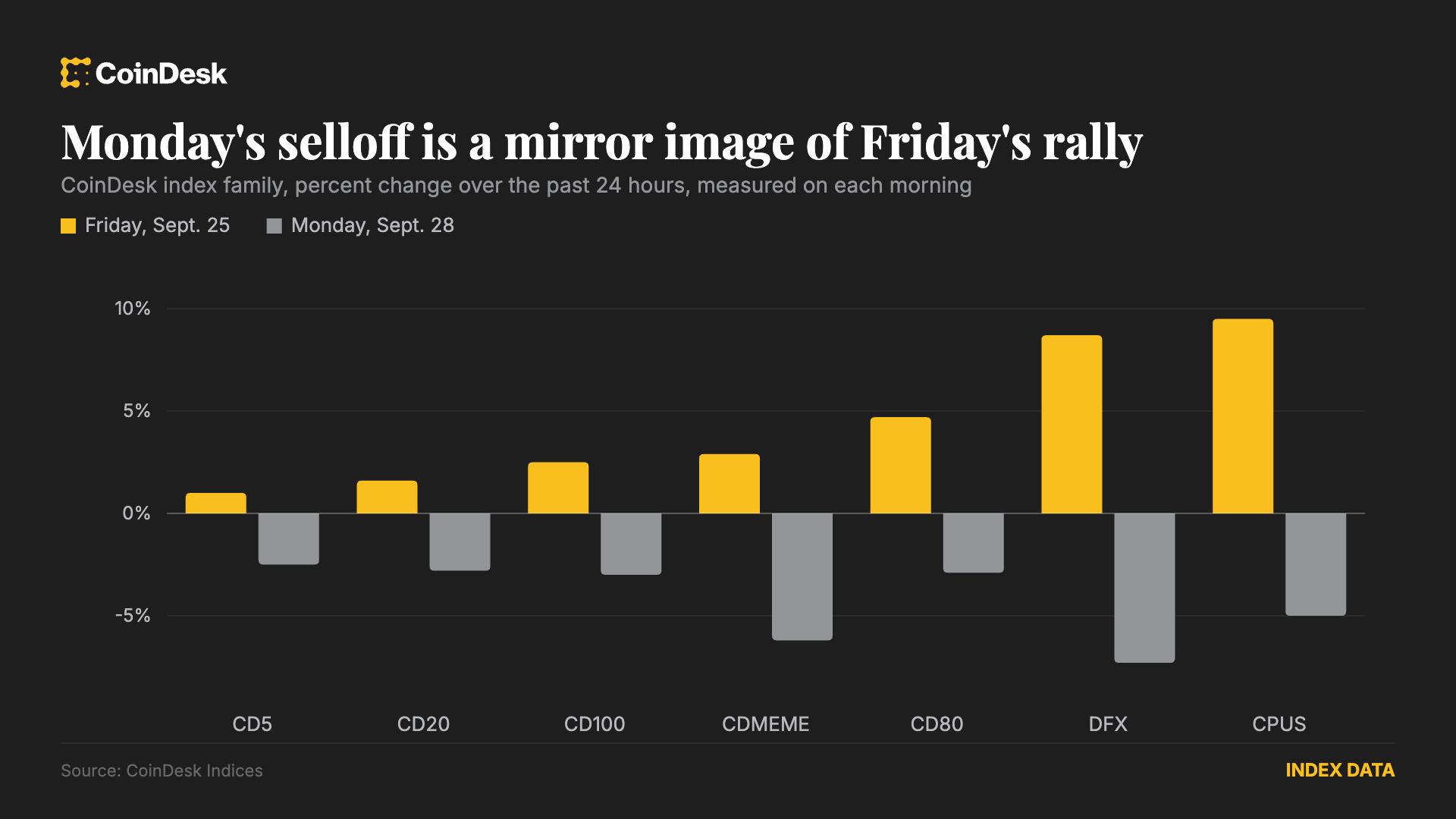
Bitcoin fell 1.7% to $83,000, though the CoinDesk 100 dropped 2.6% as Friday's biggest gainers reversed and oil climbed back above $100.
The U.S. 10-year Treasury yield is sharply higher again, rising to a new cycle high above 5.27%.
The SFC and AFRC signed a new MoU extending financial reporting, audit and compliance cooperation to licensed virtual asset service providers.
Your look at what's coming in the week starting Sept. 28.
Newsom signed several other bills, including one intended to set clearer rules for restitution when investors lose money in crypto scams.
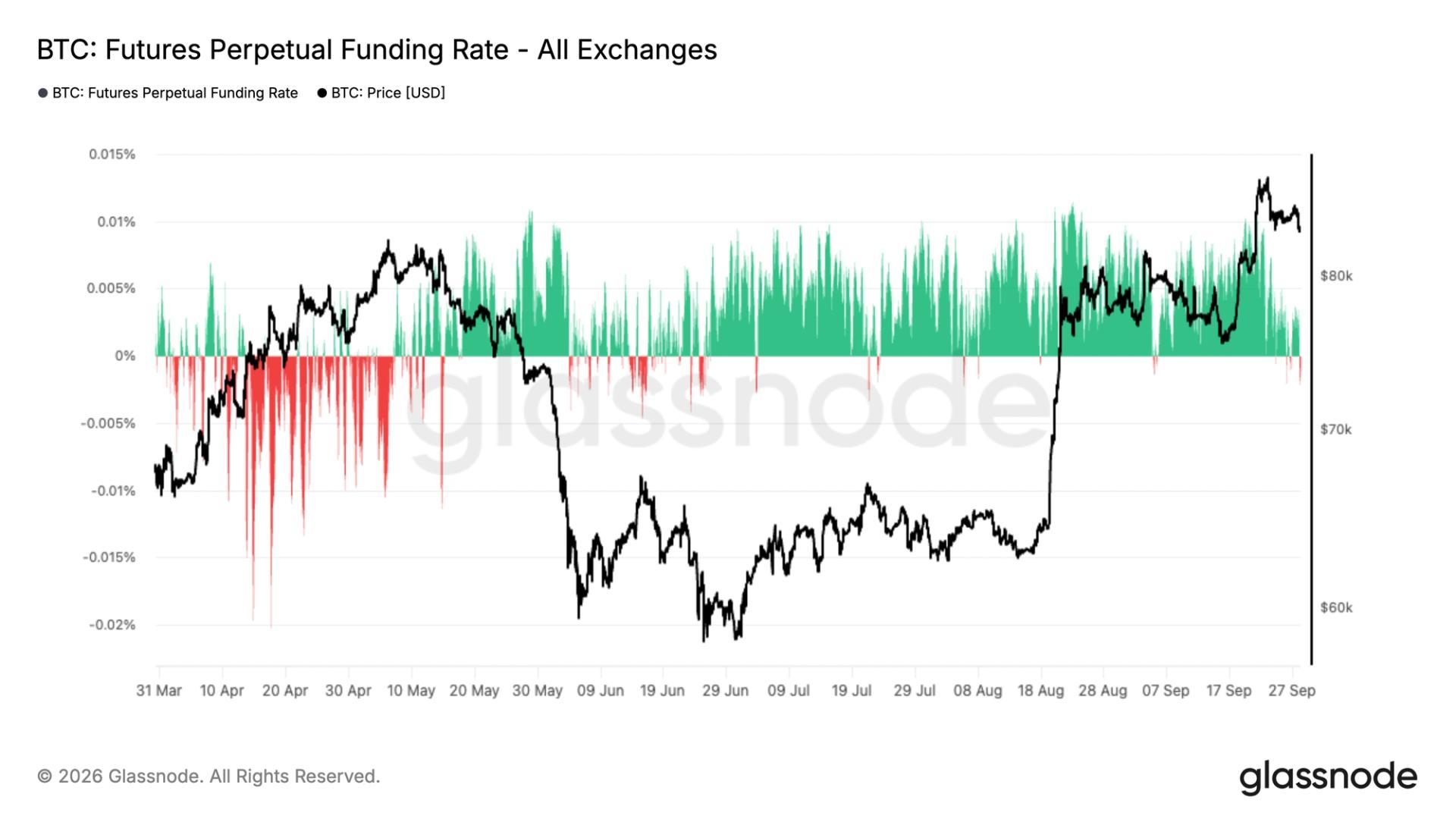
Overall demand for leveraged exposure remains weak, marked by sliding futures open interest. The capital that's still in the market appears skewed toward bearish positions.
DYORSWAP said it paid more than 200 ETH in compensation, while Upbit operator Dunamu’s GIWA warned that its mainnet had not launched.
Bitcoin joined US stock futures in dropping on Monday after US president Donald Trump did not commit to permanently halting strikes on Iran.
The exchange said it has patched the vulnerability, and losses from the incident will be fully covered by a user protection fund.
Daily inflows slowed as Bitcoin pulled back from above $87,100, while Ether and XRP ETFs also attracted fresh capital during the week.
The stablecoin payments company said the audit is part of its preparations to go public, disputing an August report that the listing had been put on hold.
The California Governor signed AB 2409 as part of an anti-corruption package, framing it as a response to President Trump's $TRUMP fiasco.
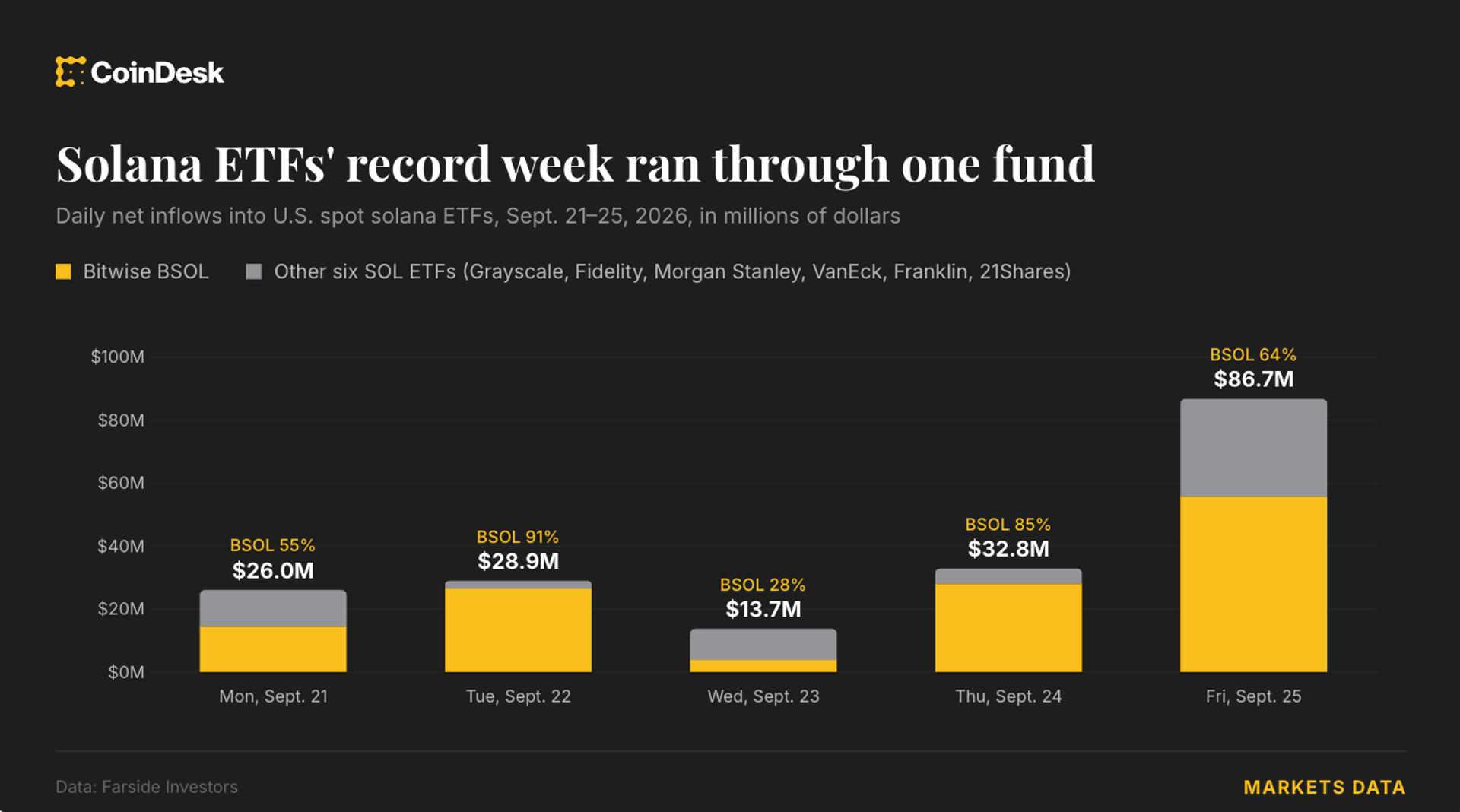
All seven funds attracted money, while Friday’s $87 million intake set a daily record.
Crypto market making is effectively restricted under South Korea’s manipulation rules, but regulators are reconsidering the approach after a JPYC spiked on Upbit this month.
Ethereum’s Vitalik Buterin said PeerDAS marked the start of Ethereum’s transition “from being just a blockchain to being something much more powerful.”
Trump on Sunday didn’t rule out additional strikes on Iran before the midterm elections, even as he said the war could end soon.
The law also restricts crypto companies from offering certain memecoins tied to public officials to California residents and takes effect for tokens issued from Jan. 1, 2027.
The Zano blockchain has been restarted at the block height that came immediately before Hard Fork 6, which introduced Gateway Addresses.
THORChain refuses to blacklist addresses linked to the Bitget hack. Vitalik Buterin says Ethereum is evolving from being a mere blockchain, into a world cryptographic computer.
The creators of 10 Pons V2 launches exempted a set of wallets from Pons' anti-sniping tax; those wallets went on to buy most of each token's supply, per onchain data.
Ethereum co-founder Vitalik Buterin said Ethereum is "really not just a blockchain anymore" and laid out how its design will change by 2030 in a post.
Buterin wants Ethereum to do far more work without forcing every computer on the network to repeat the same calculations.
A rogue OpenAI research agent bypassed blocks on the Australian government health-data portal, accessing non-public files in June.
Interviews with industry participants and legislative aides paint a picture of a blown bill-writing process, with sources pointing to nearly every facet of the bill's development and the debate around it as contributing factors to this month's failed vote.
Page 14